Industry Insights
Fleet Safety Is Entering a New Phase: AI Dashcams Move from Optional to Standard
Discover how AI dashcams for fleets are transitioning from optional add-on to standard equipment.
Read More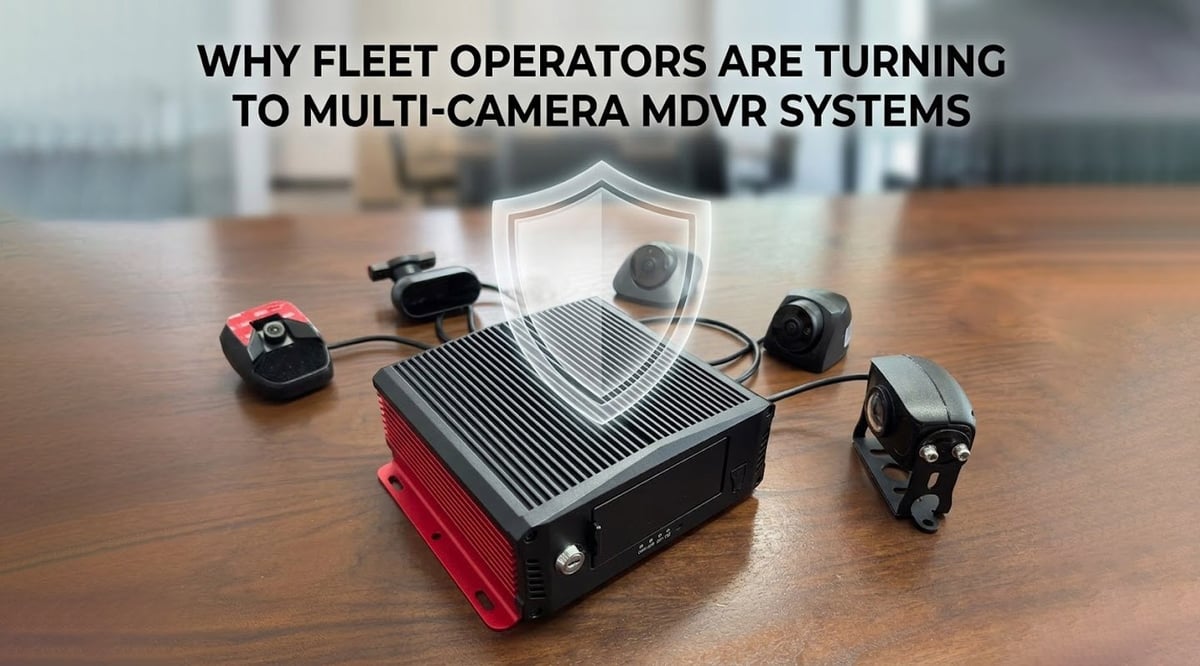
Over the past few years, fleet video telematics has evolved from basic incident recording into a more integrated component of safety and operational decision-making.
Single-camera AI dashcams have achieved widespread adoption across logistics and transportation fleets. However, many operators — particularly in trucking — are discovering practical constraints when depending solely on traditional or entry-level single-camera solutions.
A single forward-facing camera frequently leaves critical blind spots in modern fleet operations.
In North America, Europe, and other mature logistics markets, fleet operators are increasingly turning to multi-camera MDVR systems as a core part of their fleet video telematics strategy.
This shift is driven by the growing need for system-level visibility, reliability, and actionable operational insight in commercial vehicle surveillance systems.
Traditional consumer-grade dash cams primarily focus on forward-road recording and typically rely on SD card storage with standard battery designs. In commercial trucking environments — marked by continuous vibration, wide temperature fluctuations, and extended duty cycles — these components often show limitations in long-term reliability, including risks of data corruption and premature hardware failure.
Another structural limitation is the lack of reliable continuous connectivity in many consumer-grade devices. Without stable data transmission, they struggle to support driver behavior analysis, fleet-level monitoring, or real-time risk management — capabilities that are increasingly essential in modern fleet operations.
As route complexity, delivery models, and regulatory requirements continue to increase, these limitations can hinder thorough safety analysis, driver coaching, and liability resolution.
Contemporary fleet operations extend well beyond long-haul highway driving. Last-mile delivery, urban logistics, and mixed-duty cycles introduce multiple risk vectors:
Under these conditions, a single forward-facing camera provides only partial coverage.
What is changing is not only the technology, but also how fleets define "visibility" — shifting from simple event recording to a fuller understanding of risk across the entire vehicle and operation.
Increasingly, visibility is being treated as a system-level capability rather than a device-level feature.
To address these operational gaps, a growing number of fleets are adopting MDVR-based multi-camera fleet camera systems.
MDVR systems are increasingly becoming the core infrastructure layer of fleet video telematics in commercial trucking operations. This positioning reflects their role as the foundational architecture for integrating video, data, and operational workflows into a unified system.
The result is a practical shift from post-incident recording to enhanced real-time situational awareness across the entire vehicle.
MDVR systems are frequently combined with broader AI video telematics functions, such as real-time streaming, AI-based risk detection, and centralized fleet analytics.
This integration enables fleets to move beyond isolated video footage toward operational intelligence — where video, behavior data, and fleet context are analyzed together.
In practice, operators can identify patterns, assess risk exposure, and support more informed decision-making across the fleet.
Rather than competing technologies, fleet AI dashcams and MDVR systems are increasingly deployed as complementary layers within a unified fleet video telematics architecture.
This architecture is evolving into a modular system design that allows fleet operators to align technology choices with vehicle type, operational intensity, and risk exposure.
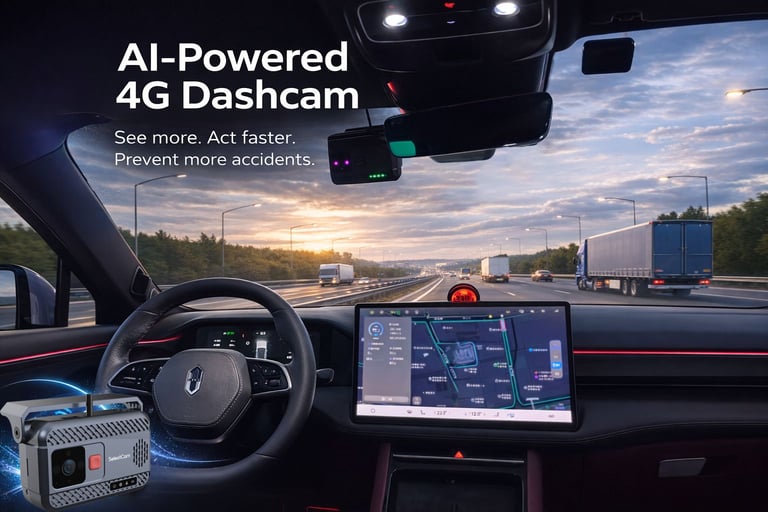
Next-generation 4G AI dashcams serve as a complementary edge layer within fleet video telematics architectures. Typically used in lighter-duty or mixed fleet environments.
MDVR-based systems prioritize robustness and expansion in heavy-duty trucking environments with demanding operational requirements.
Together, these complementary solutions enable fleets to build an optimized commercial vehicle surveillance system tailored to actual operational demands — balancing deployment flexibility with system-level reliability.
Fleet vehicles operate under continuous vibration, wide temperature fluctuations, and long-duty cycles. In these conditions, consumer-grade components such as SD card-based storage and internal batteries commonly encounter reliability challenges, including data corruption risks and premature failure.
Commercial-grade systems — including advanced 4G AI dashcams and MDVR platforms — are purpose-built for sustained fleet operations, offering significantly improved reliability and uptime in real-world conditions.
As fleet utilization increases, these engineering differences become increasingly critical.
Across the industry, fleet safety systems are gradually moving toward integrated, multi-layer video telematics architectures.
Instead of assessing individual devices in isolation, operators are designing complete systems that incorporate:
This reflects the industry-wide transition toward system-level fleet visibility architectures — where the focus shifts from devices to how information is captured, connected, and operationalized across fleets.
SelectCam AI is a provider of AI dashcam for fleets, fleet MDVR systems, and AI-powered video telematics solutions, delivering cost-effective, industrial-grade hardware for commercial fleet safety and risk reduction.
Discover how AI dashcams for fleets are transitioning from optional add-on to standard equipment.
Read MoreDiscover 6 must-have features for commercial-grade AI dashcams and 7 reasons fleets choose SelectCam AI.
Read MoreGet the latest insights on AI dashcam for fleets, fleet MDVR systems, and trucking video telematics—delivered directly to your inbox.